

Introduction
The rapid adoption of telehealth has transformed how patients access medical care across the globe. From rural clinics in Southeast Asia to specialist networks in Europe and North America, video consultations have become a standard part of modern healthcare delivery. But with that transformation comes a critical responsibility — ensuring that every virtual appointment meets the highest standards of patient data privacy and security.
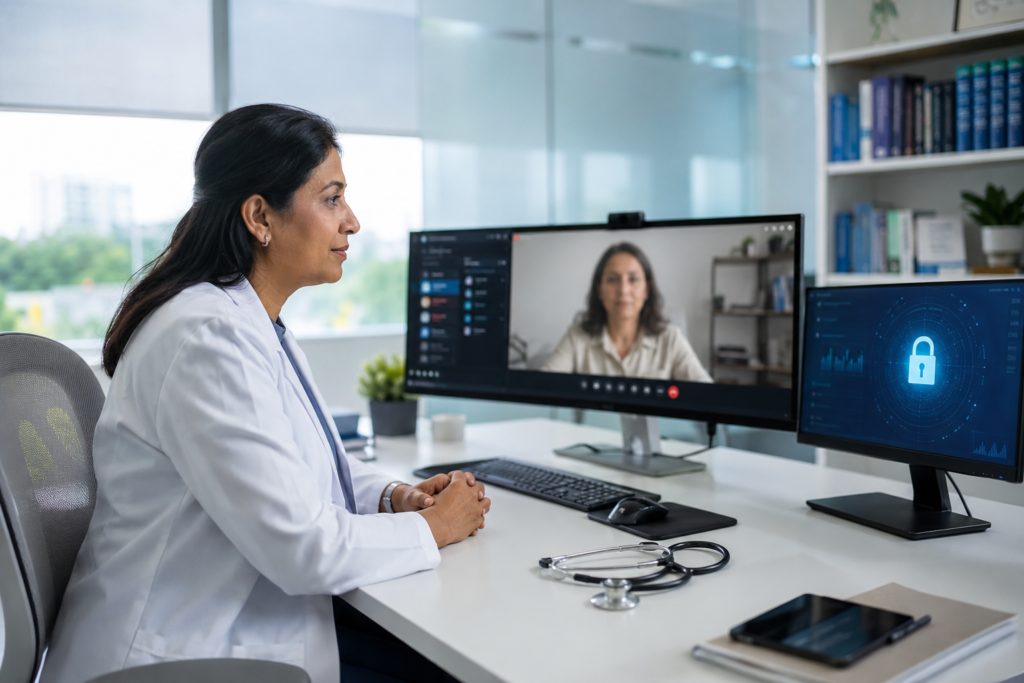
Understanding HIPAA video consultation requirements is no longer optional for healthcare providers. It is a foundational obligation that protects patients, shields organizations from devastating penalties, and builds the long-term trust that healthcare depends on. Whether you operate a solo practice or a multi-facility health network, these requirements shape how your video platform must be configured, managed, and audited.
This guide breaks down every layer of compliance — from encryption protocols to Business Associate Agreements — so you can deliver telehealth services with complete confidence in 2026.
The Problem: Why Non-Compliant Video Platforms Put Patients at Risk

Many healthcare providers, especially those who transitioned quickly to telehealth during peak pandemic periods, adopted consumer-grade video tools that were never designed for clinical use. Platforms built for general business meetings or casual calls do not provide the security architecture needed to handle protected health information (PHI).
The consequences of this oversight are not hypothetical. A video call conducted over an unencrypted or improperly configured platform can expose patient diagnoses, medication details, mental health records, and personal identifiers to unauthorized third parties. Beyond the ethical breach, organizations face regulatory enforcement that can range from corrective action plans to multi-million-dollar fines.
The challenge is compounded by the fact that telehealth regulations are continuously evolving. What was acceptable under temporary pandemic-era enforcement guidance no longer passes scrutiny in 2026. Healthcare providers who fail to audit and upgrade their video infrastructure now face an increasingly strict regulatory environment — and patients are paying the price with their privacy.
What Are HIPAA Video Consultation Requirements?
HIPAA video consultation requirements refer to the set of technical, administrative, and physical safeguards mandated under the Health Insurance Portability and Accountability Act (HIPAA) — primarily under the Security Rule and Privacy Rule — that must be in place whenever a covered entity or business associate conducts a video-based clinical encounter involving protected health information.
These requirements apply to any organization that:
- Provides healthcare services via live video consultation
- Stores or transmits video recordings containing PHI
- Uses third-party video platforms to deliver telemedicine
- Processes billing or clinical data linked to video encounters
In practical terms, HIPAA video consultation requirements cover three interconnected domains: the technology used to transmit the consultation, the agreements in place with technology vendors, and the policies that govern how staff use those tools.
Core Technical Safeguards for Video Consultations
- End-to-End Encryption

Every video consultation involving PHI must be transmitted using strong encryption. The industry standard is AES-256 encryption for data at rest and TLS 1.2 or higher for data in transit. End-to-end encryption ensures that only the authorized participants — the clinician and the patient — can access the session content. No third party, including the platform vendor, should be able to intercept or read the transmission.
- Unique User Authentication
Access to the video platform must be controlled through verified, unique credentials. Generic logins or shared passwords are a direct HIPAA violation. Multi-factor authentication (MFA) is increasingly considered a best practice and, in many compliance frameworks, a de facto requirement. Each clinical user must have their own traceable access credentials.
- Automatic Session Timeout
Sessions that remain open without activity create an unnecessary exposure risk. HIPAA-compliant video platforms must enforce automatic timeout policies, locking or terminating sessions after a defined period of inactivity. This applies both to the consultation interface and to any administrative dashboards where patient data can be viewed.

- Audit Logs and Access Controls
Every access event — who joined a session, when, from which device, and for how long — must be logged and stored in tamper-resistant audit trails. These logs are essential for demonstrating compliance during audits and for investigating potential breaches. Role-based access controls (RBAC) must limit who can initiate, record, or review consultations based on clinical necessity.
- Secure Data Storage and Retention
If video sessions are recorded, those recordings must be stored in encrypted, access-controlled environments with documented retention and deletion policies. Indefinite storage of unencrypted video recordings is a significant compliance risk that organizations frequently overlook.
Administrative and Physical Safeguards
- Business Associate Agreements
Any third-party vendor that has access to PHI in connection with your video consultations — including your video platform provider — must sign a Business Associate Agreement (BAA) with your organization. This is a non-negotiable legal requirement. A vendor that refuses to sign a BAA cannot be used for HIPAA-covered video consultations, regardless of how convenient or affordable their platform may be.
- Staff Training and Policy Documentation
Compliance is not just a technology problem — it is a human systems problem. Healthcare organizations must maintain documented policies for telehealth conduct, staff must be trained on those policies at least annually, and evidence of that training must be retained. This includes guidance on patient privacy during video calls, proper session setup, and protocols for technical failures.
Risk Assessment and Management
Organizations are required to conduct regular risk assessments of their telehealth infrastructure and document the mitigation strategies applied. As video technology evolves and new threat vectors emerge, these assessments must be updated — not conducted once and filed away.
Real-World Case Study: What Happens When You Get It Wrong
Scenario: Regional Telehealth Network — A Composite Case

Consider a mid-sized telehealth network operating across multiple regions that chose to use a popular general-purpose video conferencing tool for patient consultations — without executing a BAA. The vendor’s platform was not designed with healthcare encryption standards in mind, and session data was routed through servers in multiple jurisdictions without patient notification.
During a routine compliance audit, the organization discovered that over 14,000 patient encounters had been conducted through this platform over an 18-month period. The audit found no BAA in place, no end-to-end encryption for the video streams, and no audit logging capability within the platform.
The consequences were severe:
- A mandatory corrective action plan requiring a full infrastructure overhaul within 90 days
- Significant financial penalties under HIPAA enforcement provisions
- Notification obligations to tens of thousands of affected patients
- Reputational damage that resulted in a measurable decline in patient trust and enrollment

The lesson: No platform convenience is worth the cost of non-compliance. The investment in purpose-built, HIPAA-compliant video consultation infrastructure is orders of magnitude smaller than the cost of remediation after a breach or enforcement action.
See it in practice: To understand how HIPAA-compliant video consultation works within a real clinical specialty, read how Telesecure 360 powers compliant dermatology telehealth — from encrypted sessions to audit-ready documentation.
HIPAA-Compliant vs. Non-Compliant Video Platforms: A Comparison
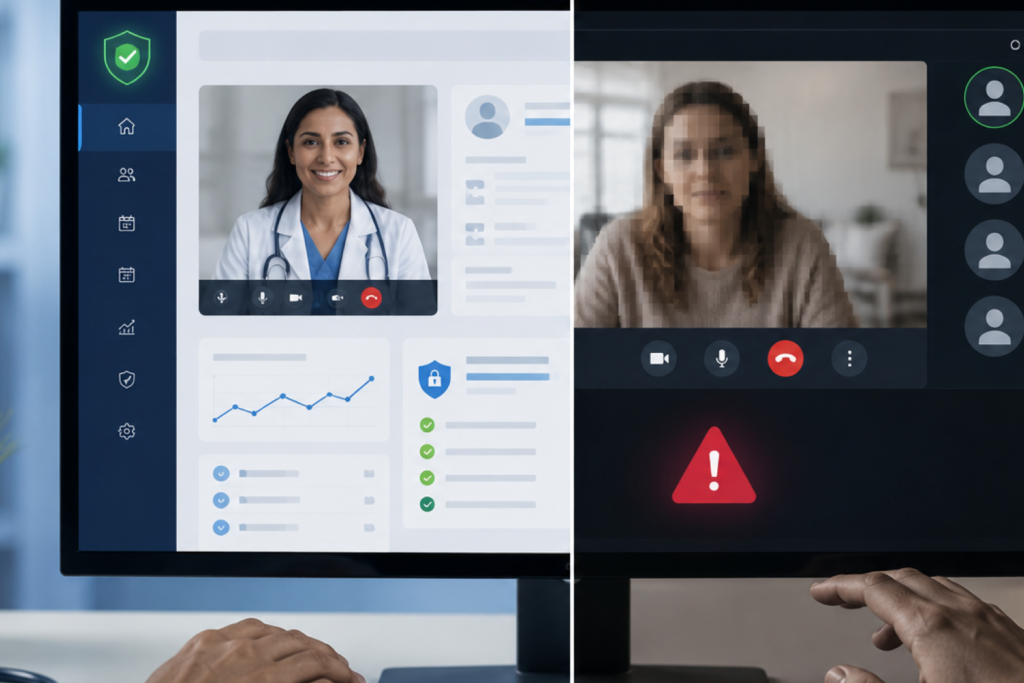
| Feature | HIPAA-Compliant Platform | Non-Compliant Platform |
| Encryption | AES-256 / TLS 1.2+ end-to-end | Basic or partial encryption |
| BAA Available | Yes — mandatory before use | No or refuses to sign |
| Audit Logs | Comprehensive, tamper-resistant | Limited or none |
| Access Controls | Role-based, MFA-supported | Generic logins, no MFA |
| Session Timeout | Configurable auto-timeout | Manual logout only |
| Data Residency | Documented, controlled | Unknown or variable |
| Recording Storage | Encrypted, policy-governed | Unsecured cloud storage |
| Staff Training Support | Built-in compliance documentation | Not provided |
| Breach Notification | Contractually defined SLA | Unclear or absent |
| Regulatory Updates | Vendor monitors and adapts | No compliance roadmap |
The difference between these two categories is not merely technical — it is the difference between a defensible compliance posture and an organization that is one audit away from a crisis.
How Telesecure 360 Meets Every Requirement
Telesecure 360 was purpose-built to satisfy HIPAA video consultation requirements at every level of the compliance framework. As a fully white label telemedicine platform, Telesecure 360 lets healthcare organizations deploy a branded, compliant virtual consultation environment in weeks — not months — without sacrificing a single security standard.
Unlike general-purpose video tools retrofitted with healthcare language, Telesecure 360 embeds compliance into the core architecture of its platform:
End-to-End Encryption by Default Every consultation on Telesecure 360 is protected by AES-256 encryption at rest and TLS 1.3 in transit. There are no configuration options that can accidentally disable encryption — it is the only mode the platform operates in.
BAA Execution Made Simple Telesecure 360 provides a standard, legally reviewed Business Associate Agreement as part of every onboarding process. Your legal obligations to your video vendor are covered from day one.
Comprehensive Audit Infrastructure The platform maintains immutable audit logs of every session event, accessible through an administrative dashboard and exportable for compliance reporting at any time.
Built-In Staff Compliance Tools Telesecure 360 includes policy documentation templates, staff training materials, and role-based access controls designed to make the human side of compliance as straightforward as the technical side.
Global Data Residency Options For healthcare providers operating outside the United States who must satisfy both HIPAA principles and local data sovereignty regulations, Telesecure 360 offers configurable data residency settings to keep patient data within required geographic boundaries — fully supporting GDPR, PIPEDA, PDPA, and other regional frameworks.
Key Statistics: The State of Telehealth Compliance in 2026
Understanding the landscape helps contextualize the urgency of meeting HIPAA video consultation requirements:
- Telehealth utilization has stabilized at approximately 38 times higher than pre-2020 baseline levels, making compliant infrastructure a permanent — not temporary — necessity.
- Healthcare data breaches remain among the most expensive of any industry, with the average cost exceeding $10.9 million per incident as reported by IBM’s Cost of a Data Breach studies. For context on what a compliant platform costs by comparison, see Telesecure 360’s 2026 telemedicine platform pricing guide.
- Video-related PHI exposure incidents have been cited in enforcement actions affecting organizations across North America, Europe, and the Asia-Pacific region, confirming that this is a global compliance challenge.
- 93% of healthcare organizations now offer at least some form of telehealth service, yet a significant minority have not fully addressed the BAA and encryption requirements specific to video consultations.
- 2026 enforcement priorities include telehealth platform audits, particularly for organizations that expanded video services rapidly during the pandemic and have not conducted subsequent compliance reviews.
These numbers are not intended to create alarm but to reinforce a straightforward truth: the scale of telehealth adoption has outpaced compliance readiness in many organizations, and the window for voluntary remediation is narrowing.
Frequently Asked Questions
- What is the most important HIPAA requirement for video consultations?
The single most critical requirement is executing a signed Business Associate Agreement with your video platform vendor before conducting any PHI-involved consultation. Without a BAA, every session is a potential HIPAA violation regardless of the platform’s technical security features. Alongside the BAA, end-to-end encryption of the video stream is equally non-negotiable under the Security Rule’s technical safeguards mandate.
- Can I use Zoom or Teams for healthcare video consultations?
Some general-purpose platforms offer healthcare-specific tiers that include BAA execution and enhanced security settings. However, these configurations must be explicitly activated and verified — using a standard consumer or business account for clinical consultations without a signed BAA is a compliance violation. Purpose-built healthcare video platforms like Telesecure 360 eliminate this configuration risk entirely by making compliance the default, not an option.
- Do HIPAA video consultation requirements apply outside the United States?
HIPAA is a United States federal law, but its underlying privacy and security principles are widely adopted as an international benchmark for healthcare data protection. Healthcare organizations in other countries must comply with their own local regulations — such as GDPR in Europe, PIPEDA in Canada, or PDPA in Southeast Asia. Platforms built to HIPAA standards typically satisfy or exceed most equivalent international requirements, making HIPAA compliance a practical global standard for secure telehealth.
- What happens if a video consultation is conducted without proper encryption?
An unencrypted or insufficiently protected video consultation involving PHI constitutes a potential breach under HIPAA’s Security Rule. Depending on the nature and scope of the exposure, this can trigger mandatory patient notification, regulatory investigation, corrective action plans, and financial penalties. The severity depends on whether the violation was the result of willful neglect and whether the organization took prompt corrective action.
- How often should we audit our telehealth video platform for compliance?
A formal risk assessment of your telehealth infrastructure should be conducted at minimum annually, and additionally any time there is a significant change to your platform, vendor, or clinical use case. Many compliance experts recommend quarterly reviews of audit logs and access controls as an ongoing operational practice, with a comprehensive annual assessment covering all HIPAA safeguard domains.
- Is recording video consultations allowed under HIPAA?
Video consultations can be recorded under HIPAA, but doing so introduces additional compliance obligations. Recordings become PHI and must be stored with the same encryption, access control, and retention policies that apply to other forms of electronic health records. Patients must generally be informed that their session is being recorded, and recordings must be handled within your documented data governance framework.
Conclusion
Meeting HIPAA video consultation requirements in 2026 is not a one-time configuration task — it is an ongoing organizational commitment that spans technology, policy, training, and vendor management. As telehealth continues to mature as a standard care delivery modality, regulators are raising expectations and tightening enforcement, making proactive compliance more important than ever.
The good news is that compliance and clinical excellence are not in conflict. When you build your telehealth program on a platform designed from the ground up to meet these requirements — one that handles encryption, audit logging, BAA management, and data governance as core functionality rather than optional add-ons — your clinical teams are free to focus entirely on patient care.
Telesecure 360 exists to make that possible. Every patient deserves the same privacy protections in a virtual exam room as they receive in a physical one, regardless of where in the world they are receiving care.
Ready to ensure your video consultation program meets every HIPAA requirement? Explore Telesecure 360’s compliance features or speak with our team to schedule a platform walkthrough tailored to your organization’s needs.
This content is for informational purposes only and does not constitute legal advice. Organizations should consult qualified legal counsel for guidance specific to their regulatory environment and compliance obligations.
